
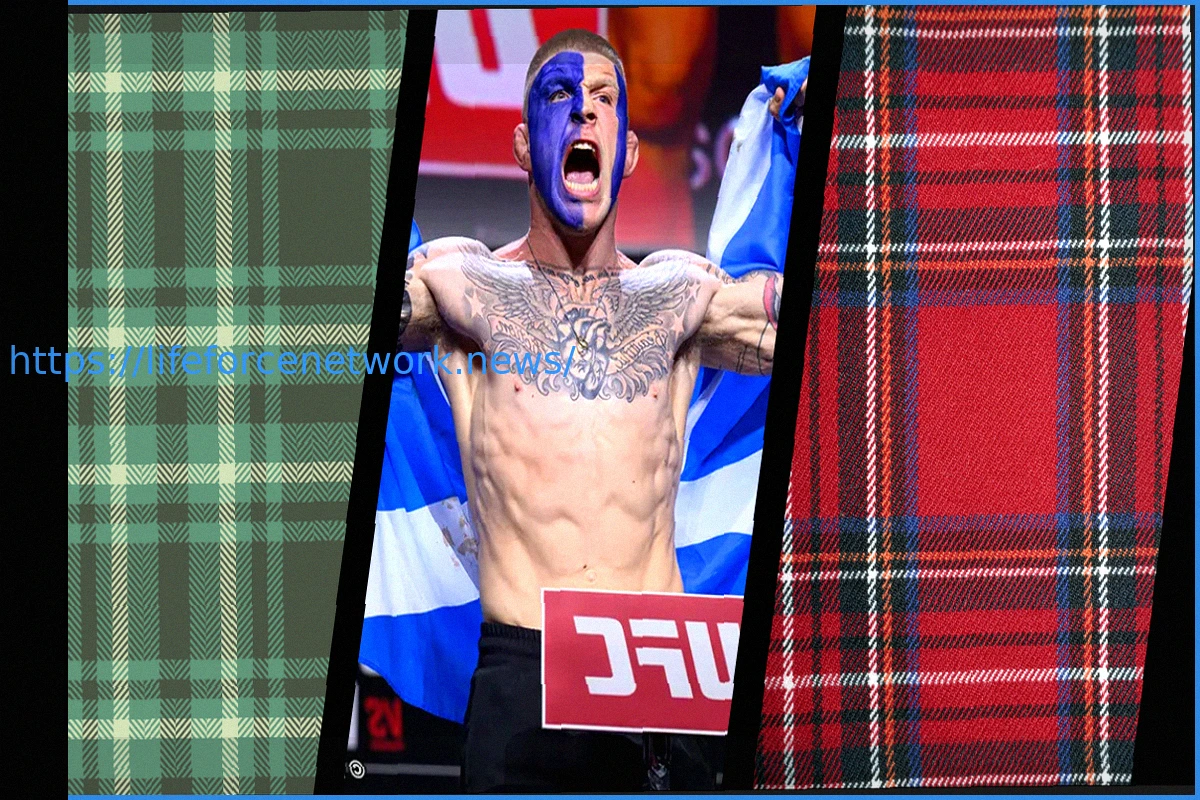
Scottish UFC athlete Chris Duncan openly embraces his national heritage, his role as a father, and the compelling contrast between his “barbarian” persona inside the cage and his loving dad identity at home. As he gears up for an upcoming high-profile bout, Duncan’s aspiration to bring a unique piece of his culture—tartan shorts—into the UFC Octagon remains a strong personal goal.
Scottish Roots and the Dream of Tartan Shorts
Duncan has consistently integrated his Scottish origins into his fighting identity, often surrounding himself with symbols from his upbringing near Glasgow. He speaks with profound affection about growing up in Scotland, cherishing its landscapes and traditional emblems like bagpipes, which he describes as consistently evoking “chills” and a sense of “sheer pride.” Earlier in his athletic career, representing Scotland in rugby in France further solidified the deep meaning of competing while draped in his nation’s colors.
“One of my favorite things about growing up in Scotland would obviously be the scenery and the kind of patriotic symbols that we have, like the bagpipes. They always bring me chills; they always bring me sheer pride. Playing sports for your country and representing your country, I always hold that near and dear to my heart and that’s why I wear the flag,” Duncan states, emphasizing his unwavering connection.
He candidly discusses the current uniform restrictions within the UFC, noting that he cannot change his shorts color unless he alters his registered country, a suggestion he firmly rejects. Duncan prefers to stick with the mandated black, white, or blue options associated with being a Scottish fighter rather than compromising his national representation for a different aesthetic. Nevertheless, he holds a clear vision for the future of his fight gear:
“The UFC don’t allow you to change your shorts unless you change your country to match the color. I wanted a different color maybe two camps ago. I was like, I’m not changing my flag. Why would somebody do that? You’re supposed to be representing your country. I’m Scottish, so I’m going to have to deal with the black, the white or the blue shorts. But if Dana White watches this, I’ve got a little bit of a design for my shorts – I want tartan shorts,” he reveals, addressing the UFC president directly.
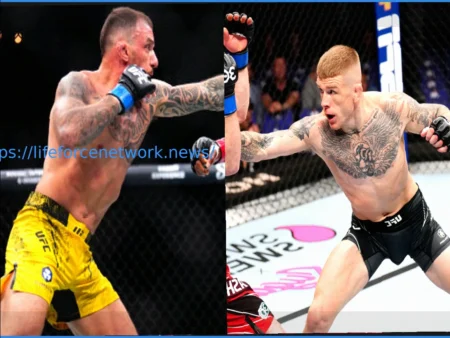
Duncan’s upcoming fight against Renato Moicano represents a classic clash of experience versus surging momentum, pitting Moicano’s years of high-level lightweight and featherweight action against Duncan’s confidence, relentless pressure, and powerful combinations.
From Father to “Barbarian”: The Octagon Switch
Duncan characterizes his fighting persona as a deliberate “switch” rather than a constant state of being. At home, he embodies the roles of father and husband. Yet, once inside the cage, he transforms, describing himself as “a barbarian, an animal, a fighter” who consciously sheds all inhibitions. He explains that while sparring with MMA gloves demands restraint, pulling punches, and avoiding genuine knockouts, the rules of fight night empower him to approach every exchange with “vicious intent.”
“I’m a different person to many different people. I’m a father, I’m a husband. How can I differentiate myself from walking into the cage and being a barbarian, an animal, a fighter, and then go home to my kids and my family? It’s the same thing with this fight. I’ve got a switch. I’m numb when it goes in there and I’m also free. When I walk into that Octagon I let the chains off,” he articulates. “In sparring rounds, especially with MMA gloves, you’re pulling your punches, you’re not hitting hard, you’re not trying to knock people out, whereas when I walk into that Octagon I can let these chains off and throw with vicious intent – and that’s what I’m going to do.”
His children are now old enough to notice their father being recognized in public, a sign that he has ascended to a new level of visibility. Duncan vividly recalls a moment with his daughter when he politely declined a photo request, prioritizing her safety and his immediate presence over a brief interaction with a stranger. Such small, meaningful exchanges significantly influence his priorities far more than any highlight-reel knockout.
“My daughter kind of recognizes, like, ‘Why does Dad get stopped in the street and why do people want pictures?’ I remember I was with my daughter and only my daughter. I’m not a fan of taking a picture when there’s not someone to hold my daughter or look after her because I’m away from looking after her, and a guy said, ‘She could take it,’ and I was like, ‘No, that’s not happening.’ The only thing I care about is if she thinks I’m a good person. Whether I’m a good fighter or not, as long as she knows I’m there for her 24/7,” he shares, highlighting his core values.
Duncan often reflects on the enduring lessons he aims to impart to his children, particularly emphasizing that he would rather they contact him in a difficult or risky situation than fear his reaction. He wants to be the person they implicitly trust to come to their aid, even if it entails inconvenience, convinced that this foundational trust holds greater significance than any championship belt or ranking.
“What I want to instill is that no matter the situation in her life, if she’s out drinking and thinks, ‘I can’t phone my dad, he’ll kill me,’ I would rather her phone me and understand that I’m trustworthy enough to go and pick her up. That’s what I need,” he asserts.
While Duncan’s immediate attention remains fixed on his upcoming challenge, his articulation of his roles—as a proud Scottish representative, a dedicated teammate turned formidable opponent, and above all, a devoted father—reveals that his journey is profoundly enriched by far more than mere fight outcomes.