
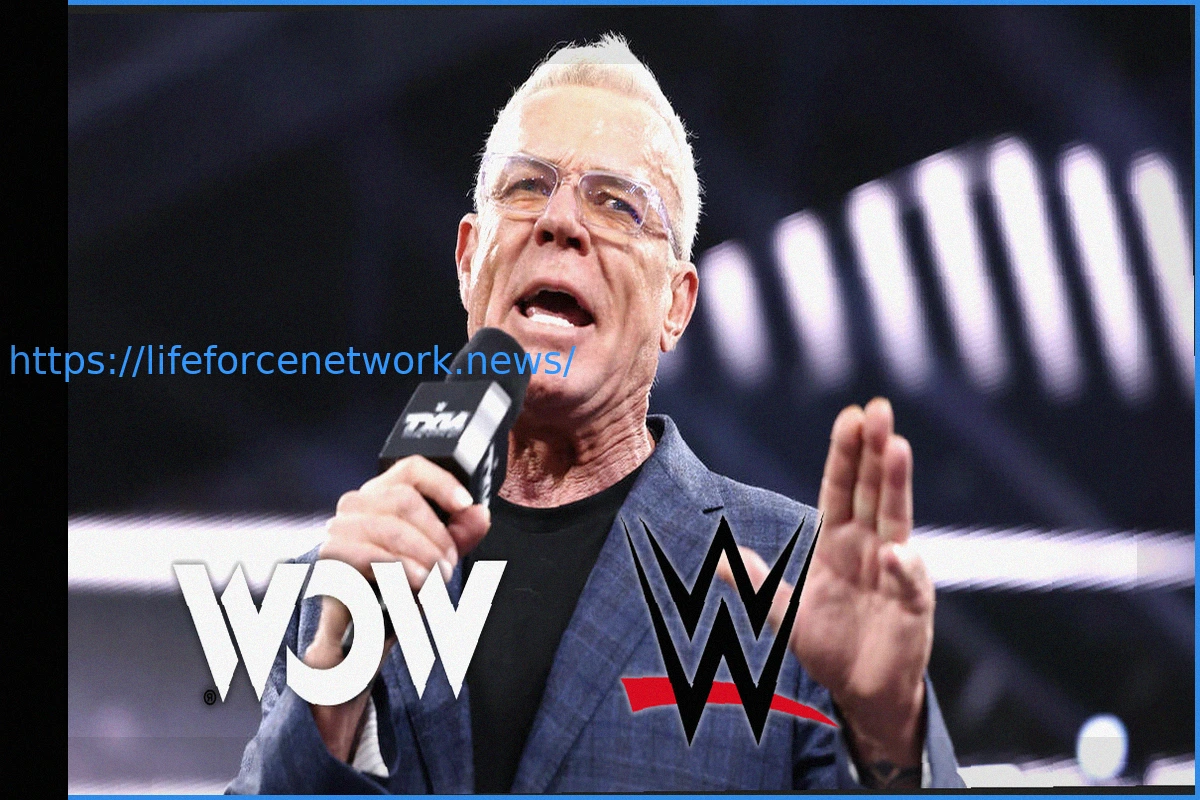
Eric Bischoff, a key figure who experienced the professional wrestling boom from both sides—leading WCW Nitro against WWE in the 90s and now observing the current landscape as a seasoned executive—recently challenged a widely held belief. He disputes the idea that major wrestling companies inherently require a strong competitor to maintain their edge. His insights were shared during a recent discussion.
Is Competition Necessary?
While Bischoff acknowledges the fundamental business principle that competition can be beneficial, he views the Monday Night Wars as a unique historical event, not a blueprint easily replicated today. He recalled that in the mid-1990s, WWE’s Monday Night Raw primarily targeted younger viewers, featuring larger-than-life characters and storylines designed for children and families.
“It is a theory everybody subscribes to—that competition is good for everybody—and generally that is true. But unlike the Monday Night Wars, the situation now is very different. Remember, the Monday Night Wars started with WWE having Monday Night Raw targeted toward teens and preteens. It was a kids’ show. The characters were kid‑friendly, the storylines were kid‑friendly, very over‑the‑top and cartoonish.”
When WCW Nitro debuted on TNT in 1995, Bischoff adopted an opposing strategy, explicitly targeting the 18–49 adult demographic with a more reality-driven presentation. This approach proved highly successful: Nitro outperformed Raw in ratings for 83 consecutive weeks. This compelled WWE to significantly revamp its product, eventually ushering in the Attitude Era to reconnect with an older audience. For Bischoff, this period exemplifies what occurs when two companies are sufficiently close in size that they can react to each other’s actions in real-time.
“Then Nitro comes along and we put an edge to it. We went after the 18–49‑year‑old demo and did very well with that—we outperformed WWE. Eventually, after a year or so of getting their asses kicked, they looked at what we were doing and said, “Okay, we are going to do what they are doing, because we are losing and they are winning.” They changed their format.”
When questioned about whether contemporary promotions require such an intense rivalry to thrive, Bischoff asserted that the current disparity between WWE and all other companies is simply too vast. WWE’s modern business model is underpinned by lucrative global media rights, massive stadium-level live events, and an extensive licensing and content pipeline that no competitor can realistically match in the short term. In his assessment, nothing another company does currently would exert significant financial pressure on WWE, unlike WCW once did. While competition can still create opportunities, he doesn’t foresee a scenario where a rival promotion could genuinely challenge WWE for its survival.
“Competition forced me to come up with ideas that were better than theirs, and once I did, it forced them to come up with ideas better than mine. That is the perfect example of “competition creates opportunity.” But now the distance between number one and number two is too great. If you measure WWE’s business by revenue and real numbers—not rumors or dirt sheets—the footprint is so big that nothing a competitor does will put realistic pressure on WWE. It is just not going to happen.”
Eric Bischoff on Today’s Crowded Landscape
Bischoff perceives the wrestling industry’s current state as a consequence of its own success. There is an unprecedented amount of wrestling content available across television and streaming services, encompassing WWE and AEW in the United States, alongside strong regional promotions in Japan, Mexico, Europe, and elsewhere. This sheer volume necessitates a constant flow of creative output: weekly shows, monthly specials, and major tent-pole events, all requiring fresh matches, storylines, and characters. In his view, this relentless schedule leaves little time for creative ideas to fully mature.
“The industry has grown so much, so fast, that we are probably suffering through some growing pains. If you just look at the sheer amount of wrestling content out there that needs to be produced, created and distributed, it is a lot—there is a lot of creative and a lot of product.”
This demanding schedule becomes even more vulnerable when key talent are sidelined by injuries. For example, WWE’s recent preparations for WrestleMania 42 have already faced disruptions due to injuries that forced creative adjustments for Raw and SmackDown leading into the major event. Reports indicate how a single injury can cascade across multiple storylines, altering match outcomes, reshaping Elimination Chamber lineups, and delaying long-term narratives planned to culminate at major shows.
“Sometimes the best ideas take a while to develop. You cannot have a world‑class idea every single pay‑per‑view or every single show. Good ideas, good storylines, great matchups take time to build. Because everything has grown so fast and there is so much product out there, we are probably going through a bit of a creative dry period.
“That changes a lot of things and can affect three, four, five different people on the card. Between how fast things have grown and injuries changing creative, we might be in a little bit of a dry spell right now. But do not worry, the business goes through this all the time.”
Despite these challenges, Bischoff is not pessimistic about the future direction of wrestling. He considers creative lulls to be a natural part of the industry’s cycle, just as they occurred before Nitro, during the Monday Night Wars, and in the years following WCW’s closure. The business has consistently moved in waves, and from his vantage point, the current period represents another phase where promotions are adapting to their expanded scale.